

Everything You Need to Know About Electric Car Batteries
Overview
There was a time when car batteries were only meant to start the engine. But now, with electric vehicles (EV’s) taking the wheel from their traditional counterparts, the spotlight is squarely on the battery. In an EV, the battery does more than start the engine – it propels the vehicle and powers all its system components.
This article will inform you about electric car batteries, detailing their functions, types available, and durability over time. So, if you’re considering buying an EV and are curious about its battery’s long-term usage, this will provide all the insights you need.
Types of Electric Car Batteries and Their Composition
You might know that fueled vehicles use lead-acid batteries to start the engine. Modern EV’s still rely on a 12V lead-acid battery for auxiliary functions. However, these batteries are no longer suitable for powering electric motors. They are heavy and face reliability issues.
Modern fully electric vehicles use Lithium-ion (Li-ion) batteries, the same type found in smartphones. These batteries are lighter and last much longer than lead-acid ones. Within Li-ion technology, there are several subtypes, differentiated by the composition of the cathode material:
NMC Batteries
One common type is Nickel Manganese Cobalt (NMC). The biggest plus point of NMC batteries is their higher energy density (150 to 250kWh/kg), which means they pack more power in small volumes.
So, they are space-saving, lightweight, and provide a larger range. But their lifespan is short, under 2000 cycles. Tesla Model Y, Model 3, and BMiX3 are some of the vehicles that use NMC batteries.
NCA Batteries
Nickel Cobalt Aluminum (NCA) is another type of Li-Ion battery that has more sustainable ingredients than NMC batteries. They share similar advantages with slightly higher energy density (200 to 260 kWh/kg). However, they are not as popular as NMC batteries. Audio Q8 E-Tron and earlier models of Tesla 3 had this battery.
LFP Batteries
One affordable emerging technology is Lithium Ferrous Sulphate (LFP) batteries. Besides price, their biggest plus point is a higher life span, up to 5000 charge cycles. So, they are great for daily use EV’s.
However, their drawback is lower energy density (about 150kWh/kg) which significantly affects the overall range of vehicles. BYD Seal and OTTO 3 are some known models that use LFP batteries.
NMH Batteries
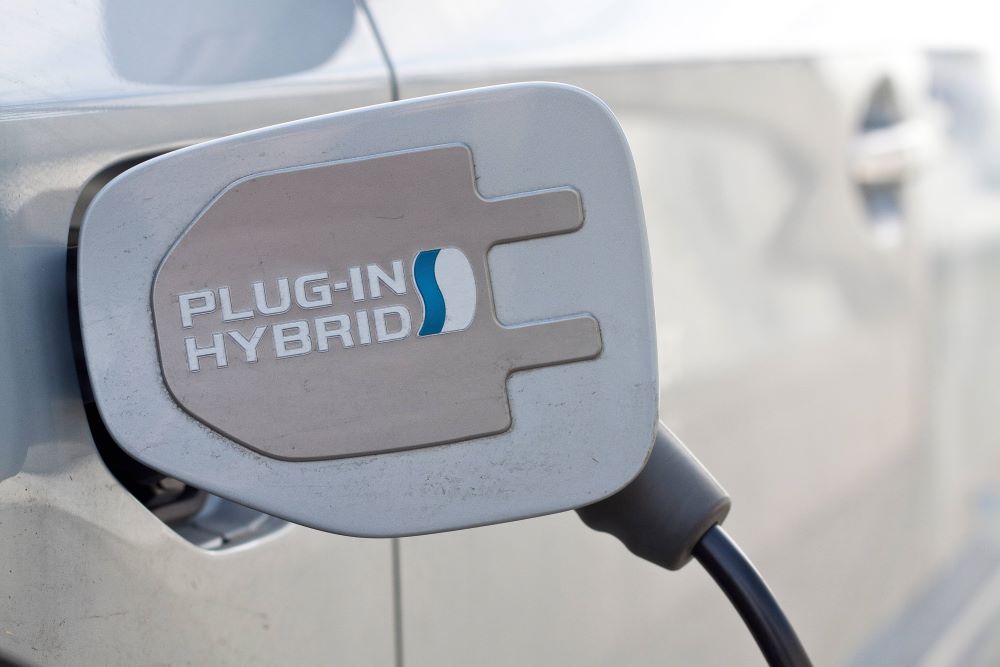
Hybrid Electric Vehicles (HEV’s) use Nickel Metal Hydride (NiMH) batteries. They complement and work with the combustion engine. These batteries are heavier and have a shorter lifespan compared to Li-ion batteries. The Toyota RAV4 is an example of a vehicle that uses NiMH batteries.
For more information on hybrid vehicles, check out our handy guide on choosing an electric vehicle vs hybrid vehicle.
How long do electric car batteries last?
An electric battery stores energy in the form of an electric charge. Over time, with repeated charging and discharging, its capacity to hold a specific amount of charge diminishes. Technically, the life of a battery is expressed as charging cycles, which represent complete charge-and-discharge processes. As discussed earlier, the lifespan of different types of electric car batteries typically ranges between 2,000 and 5,000 cycles.
Research indicates that electric car batteries degrade at an average rate of 1.8% per year1. So, it usually takes 15 to 20 years for a battery to lose most of its ability to hold a charge and reach the end of its useful life.
To provide consumers with confidence, manufacturers offer warranties based on years or mileage, similar to those for internal combustion (IC) vehicles. The standard warranty for EV batteries is 8 years or 160,000 km2. Even after this period, most batteries retain up to 80% of their original capacity.
Charging an Electric Car Battery: Methods & Charging Speed
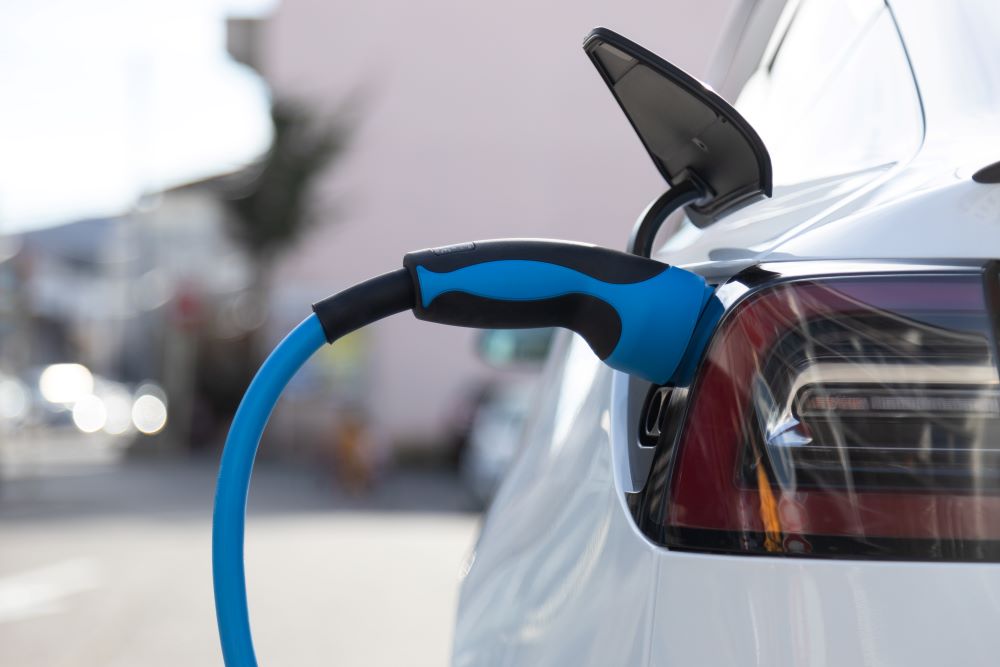
There are multiple ways to charge an electric vehicle. You can charge it at home using a Level 1 charger that comes with the vehicle. Another option is to use public charging stations equipped with higher voltage chargers.
The time required to charge depends on the level and power output of the charger. Level 1 chargers, commonly used at home, take several hours to charge the vehicle overnight. On the other hand, Level 3 chargers at public stations are the fastest.
The table illustrates the variation in power and charging speed of different chargers for EV’s:
| Charger Type | Power | Charging Speed |
|---|---|---|
| Level 1 | 2.3kW (AC) | Up to 15km range per 1h of charge |
| Level 2 | 7 to 22kW (AC) | 40 to 130 km range per 1h of charge |
| Level 3 | >50kW (DC) | Up to 420 km range per 1h of charge |
Since most EV’s use NMC batteries, it’s recommended to charge the vehicle when the battery level drops to 20% and stop charging at 80%. This ensures a maximum lifespan.
Calculating the Range of an Electric Car Battery
The range of an electric vehicle depends on several factors, including its size, aerodynamic design, weight, driving style, terrain, and more. Among these, battery capacity is a key factor that directly influences the range. The larger the battery capacity, the longer the range the vehicle can achieve.
Manufacturers usually provide the estimated range in the vehicle’s specifications. However, you can calculate it yourself using two parameters: battery capacity (kWh) and energy consumption per kilometer (kWh/km).
Example Calculation
Let’s consider an electric vehicle, BYD Atto 3. Its battery size is 60.48 kWh, and the energy consumption is 16 kWh per 100 km.
Battery Capacity: 60.48 kWh
Energy Consumption: 16kWh/100 km = 0.16 kWh/km
Range (km) = Battery Capacity (kWh)/ Energy Consumption (kWh/km)
= 60.48/0.16 = 378 km
This means the car can travel 378 kilometers on a full charge under optimal conditions.
What Happens If Your Electric Car Runs Out of Battery?
Just like a traditional car stalls when it runs out of fuel, an electric car will also eventually stop when the battery is fully drained. However, an EV’s system is smarter and more proactive than a combustion vehicle.
Modern EV’s alert the driver well in advance. When the battery drops to about 10% capacity, the car displays a warning light, similar to a low-fuel alert in a conventional car. At this stage, the vehicle enters a preservation mode to extend the remaining range, which is usually about 30 to 40 km.
In preservation mode, the car reduces power and disables non-essential functions to conserve energy. The system almost prioritises getting the vehicle to a charging point by gradually limiting performance as the battery nears zero.
Ultimately, if warnings are ignored and that preserved range is used, it will stop and you’ll have to tow it to the nearest charging station to recharge.
FAQs
What is the battery in an electric car made of?
Electric cars typically use Lithium-ion batteries. These batteries are composed of elements like lithium, nickel, cobalt, manganese, and graphite, which together enable efficient energy storage and discharge. The specific composition is dependent on the type of Li-ion battery installed.
How long does an electric car battery last?
Car manufacturers usually provide an 8-year or 100,000-mile warranty for EV batteries. Research shows that the battery capacity decreases by around 1.8% annually3. If we dig that further, we figure out that electric car batteries can last 15 to 20 years before requiring replacement.
How long does an electric car battery take to charge?
It depends on the type of charger you use. When charging at home with a level 1 charger, the charging speed is about 15km/h, which may take a full night or day to charge an EV. When charging with a commercial level 3 DC charge, the speed goes beyond 400km/h. so, it takes less than an hour to charge.
How much does an electric car battery cost?
As electric vehicles gain popularity, EV battery prices are gradually decreasing. Currently, the average cost of an EV battery is $247/kWh (NZD) or $207/kWh (AUD)4. In China, the cost is even lower, at around $227/kWh (NZD) or $188/kWh (AUD)5.
How much does an electric car battery weigh?
The weight of an EV battery depends on its energy density and capacity. For Li-Ion batteries, the density can typically range between 150 kWh/kg (LFP) and 260 kWh/kg (NCA). To estimate the weight, divide the battery capacity by the energy density. For example, a 60 kWh battery with a 200 kWh/kg density would weigh approximately 300 kg.
How long does an electric car battery last per charge?
The range per charge depends on the battery capacity and energy consumption of the vehicle. The average range of EV’s currently available in the market is about 400 km.
1. https://www.geotab.com/blog/ev-battery-health/
2. https://electricvehiclecouncil.com.au/docs/what-happens-to-ev-batteries-at-the-end-of-their-useful-life-in-a-vehicle/
**The stats are taken on average from multiple car manufacturers like Tesla, BYD, and BMW they offer 8 year/160,000 km warranty
3. https://www.pcmag.com/news/ev-batteries-101-degradation-lifespan-warranties-and-more
4. https://www.mynrma.com.au/electric-vehicles/owning/cost-to-replace-ev-battery
5. https://www.mynrma.com.au/electric-vehicles/owning/cost-to-replace-ev-battery
*Important information* - Click here to read more about our DIY Advice Terms and Conditions.